
Nassau County Arrest Reports
The NCPD Police News archive is the county's best multi-day arrest publication. Each entry carries a date and a headline. You might see Arrest, Arrest/Grand Larceny, or Arrest - DWI, mixed in with other public-safety news. Older pages stay reachable even after they drop off the homepage. So the archive works well for looking back. Scan it over days or weeks of Nassau County arrest reports. Just remember that NCPD never calls it a complete booking log.
Its gaps run in two directions. NCPD picks which incidents deserve a release at all. And Nassau is full of village and city police departments. Their arrests never enter the county stream. A thin set of cards on a given date tells you nothing about arrest counts. It only means no matching release appears there.
The archive showed no arrest-release cards across the September 5 through 7, 2026 Labor Day stretch. Quiet pages prove nothing, though. When the archive falls silent, ask the police records office, the Nassau County Correctional Center, VINE, or the court directly.
Read Nassau's Police Blotter
Read each article carefully and keep two clocks straight. The card date marks publication. The story inside may cite a different incident or arrest date. A planned arraignment mentioned in a release still says nothing about bail, remand, release, or how the case ends. Those answers come from custody and court records.
- Open the NCPD Police News archive and review multiple pages or date groups rather than stopping at its first screen.
- Select a likely arrest headline and note the permanent article URL, headline, and displayed post date.
- Read the narrative for the incident date, arresting unit, place, accused person's identifying details, charges, and court reference.
- Check whether an attached image is labeled and described. Do not assume every agency image is a booking photograph.
- Confirm current custody with the jail or VINE and final case status with the court. Use a records request for details the release omits.
For the very latest announcements, Nassau Arrested Today is the quicker stop. The archive serves a different job: tracing releases across multiple days and recovering items that no longer sit in the latest-news cards. The official Police News archive displays the dated, multi-item layout Nassau County uses for its releases.
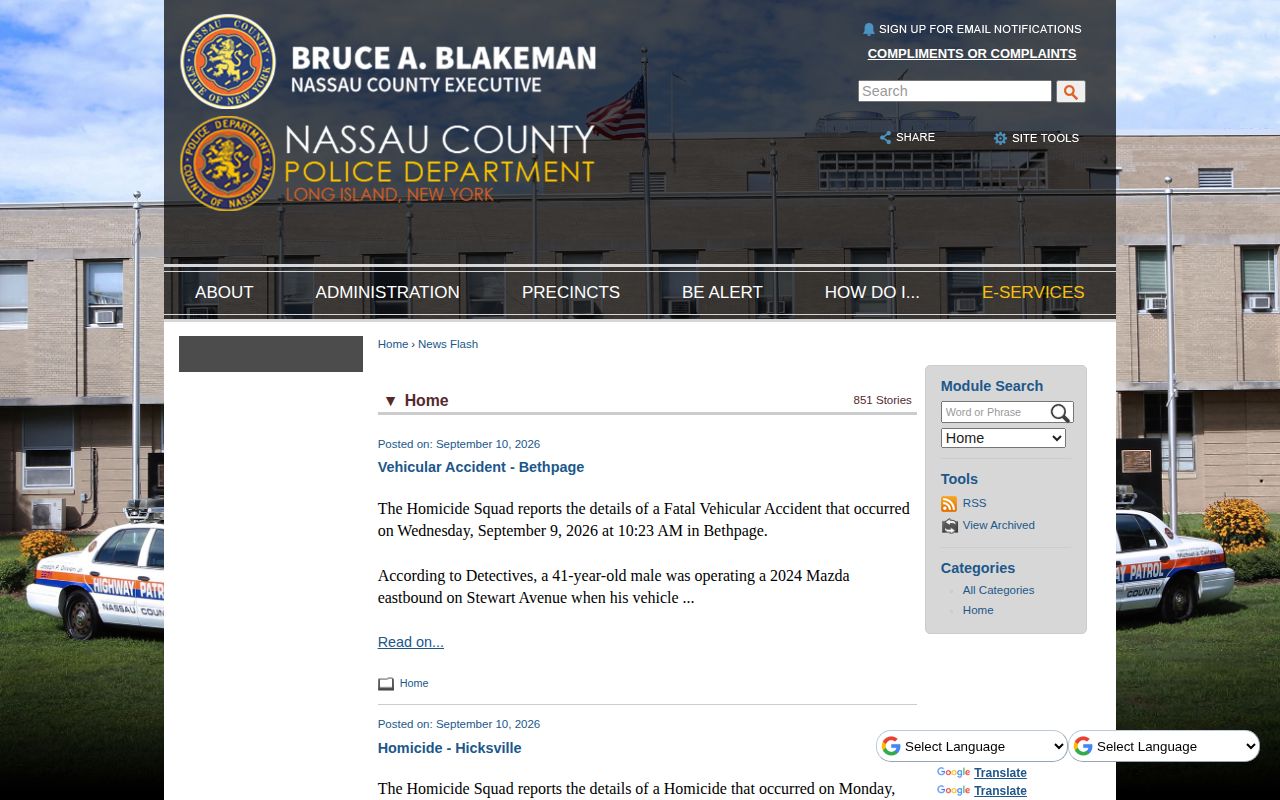
That layout shows archive depth and date gaps. It is not a full list of people booked into the county jail.
Nassau Arrest Report Fields
Police News releases tell stories rather than following a jail-record form. The fields shift with each event and whatever NCPD decides to publish. Record only what the release actually states. Skip anything a headline or photo label merely implies.
| Archive detail | How to read it |
|---|---|
| Headline | NCPD's subject label; it may combine arrest and offense terms |
| Posting date | Date of public release, which may differ from the incident date |
| Identity and age | Information released about the accused person, not a conviction finding |
| Precinct, unit, location | Agency and geographic context stated in the narrative |
| Charge wording | Charges announced at that stage, subject to later court action |
| Arraignment reference | Planned court and date where provided, not a final outcome |
| Image or caption | Selective agency media whose exact label and context must be retained |
Do not expect booking numbers, jail housing, release times, or bond figures. The archive rarely carries those. One Nassau arrest can spawn several records: police paperwork, jail intake entries, court filings, and later state or federal custody files. The New York State Department of Corrections and Community Supervision matters only after a state-custody placement, not for a fresh county arrest. Each record answers a different question. Different offices hold them.
Nassau Posting Gaps
Public-information work keeps its own schedule. A weekend arrest might be posted days later. It could be folded into a broader investigative release or left out of Police News entirely. NCPD promises no daily minimum and no guarantee that every arrest gets published. Municipal departments widen the gap further. Their announcements may sit on separate sites or nowhere online at all.
When a date comes up empty, widen the net. Check nearby dates and read the bodies of plausible stories. Late publication can bury an older incident under a newer date. If the arresting agency is unclear, pin down the exact place first. One name like Hempstead or Oyster Bay can point to a town, a village, or an unincorporated area. Each has different departments. The county's official law-enforcement directory helps you find the right office.
Note: Archive gaps should be recorded as no release postings observed, never as proof that no one was arrested.
Nassau Arrest Report Archives
Police News pages reach back into earlier months, but NCPD promises no permanent online access or fixed archive depth. Articles can be revised, moved, or taken down. New York's state archives schedule governs how local governments manage records, yet it never requires Nassau County to keep every document on a public webpage. A permanent prisoner master-summary series is one thing. Individual files, photographs, and ancillary records follow separate retention rules.
Need a report beyond what the archive shows? File through the NCPD FOIL request portal. Its paper form lists Arrest Report as a record type and asks for the incident date, place, names, and report details. Expect a final determination in roughly three weeks. That timeline can stretch with availability, authorizations, lawful redactions, denials, and copying costs. County correctional records go through the county portal and Sheriff custodian instead.
State retention rules explain why a record can outlive its webpage. They do not guarantee that every photo you request still exists. The state law-enforcement and incarceration schedule sorts out the different series and formats.
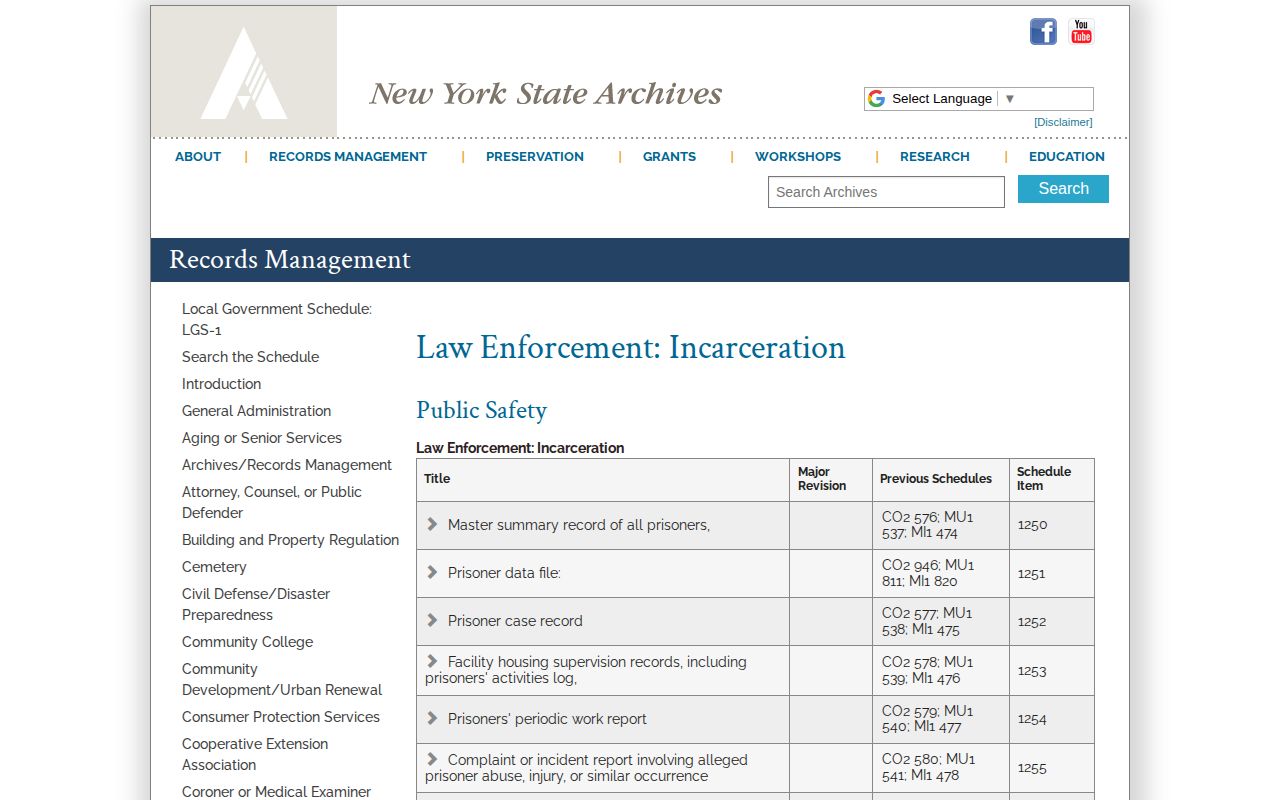
The captured schedule is a records-management source, not a public Nassau County arrest search.
Nassau Arrest News Hierarchy
Start with the agency itself. NCPD Police News posts the department's own statements about Nassau County arrests, and that release is the strongest record of what officers actually reported. Local reporting fills in around it. Newsday's Nassau section, News 12 Long Island, Patch, and community weeklies add context and sometimes surface a Nassau story that matters to a single town. None of them publishes a complete booking list. A photo in a news story may show the scene, a file image, or a reporter's shot rather than a mugshot.
Work the sources in order. The arresting agency's release or records response comes first. Court and custody sources show what happened later. Read the secondary coverage last, for extra reporting. One caution matters here: a copied charge can sit online long after the case moves on, so the latest official record beats the oldest headline every time.
Third-party mugshot pages rank below all of that. A verified Mugshots.com Nassau County, New York section held mostly stale material from roughly 2011 to 2013. Pages like that cannot show a recent arrest, current custody, a warrant, or how a case ended. Some sites even served Nassau County, Florida results in place of New York. Those mismatched pages earn no trust for Nassau County arrest research.
Nassau Arrest Photos Vary
NCPD adds photos to some arrest releases. One page used the label "Mugshots." Others label images by surname. That is selective public-information practice, not a full photo archive. The county Correctional Center posts no public gallery. A missing image says nothing about what the agency file holds.
The official Valley Stream arrest release shows how one report can lay out charges, location, unit, and arraignment language. Each element sits in its own section.
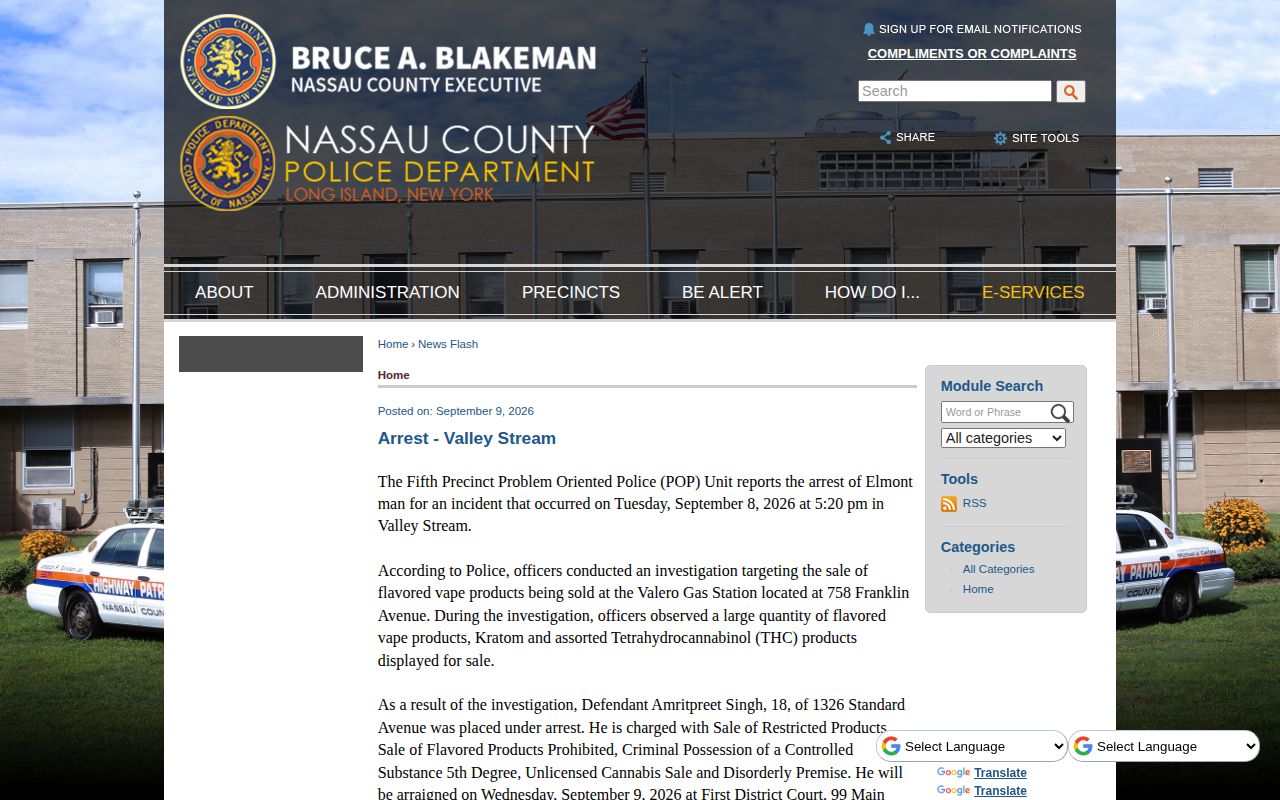
Read it as one agency report from one day. Confirm custody or outcome through the jail, VINE, or the court.
Nassau Enforcement Reports Differ
NCPD campaign-style releases describe focused enforcement. A DWI initiative is a common example. One release can explain why several related arrest stories cluster together in the news. It still lacks the denominator. A selected cluster is not the county's full booking total for that period.
Note the initiative name, dates, agencies, and stated scope. Never turn one enforcement result into a countywide crime trend. Jurisdiction matters too. NCPD figures cover its own service area, not every village or city police agency in Nassau County.
Where a release names charges, keep its own wording. Court records answer what happened next, and the jail or VINE answers who is in custody now.